Use code: THANKYOU for %15 off your order on Etsy!

What is Koliva?
The history and significance behind the Koliva tradition.
Koliva around the world:
The first time I made Koliva, I was invited by one of my cradle Orthodox friends to her house to learn the process. She was very Greek and had a specific way of making it, and told me not everyone makes it this way, but this is the best way to do it. I wasn’t sure exactly what Koliva was or what it symbolized, but I knew it was done for Saturday of Souls as my priest had talked about it at Vespers.
It was a longer process than I had imagined; she had pounds of dried wheat berries and boiled them, tasting every couple of minutes to check if they were cooked all the way through. Then she strained them with a cheesecloth and dumped them all on kitchen towels to dry. She said this would take hours and while we were doing things over, she threw them in the oven at a low heat to dry quicker.
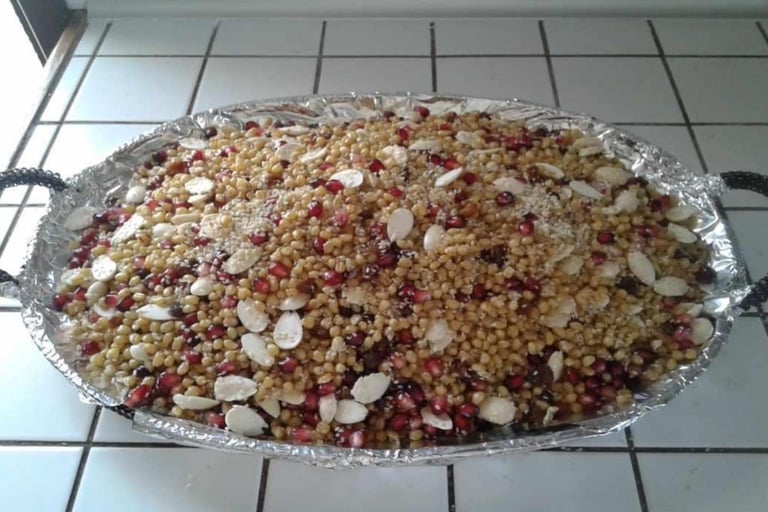
The next day she chopped up some parsley, got some pomegranates and cinnamon and mixed everything together, then she poured the dry mix in a bowl and let me decorate it. I sifted powdered sugar all over it until there was a thick layer and then she flattened it down with a cup. She had Jordan almonds and let me decorate the top with a cross in the middle and an almond border. There was so much care put into following the recipe and we even prayed at times.
While making it I had a realization that we weren’t just following a recipe, we were making something significant to offer up to God as a prayer for those we could pray for in their afterlife. You see, in Orthodoxy we are abundantly aware that when we die we can no longer pray, it’s up for those who cared for us to pray on our behalf after our death so we can be alive in Christ, as being Orthodox alone doesn’t guarantee your passage to Our Savior.
Through prayers, we can be saved even after we die.
Every ingredient tells the story of death, resurrection, hope, and eternal life, and it’s something we should all make at every soul Saturday where we have the chance. We pray for our loved ones just as we’d want prayers to be said for us after our passing.
One of my favorite things about Orthodox traditions is that everything we do has layers of meaning and the tradition of Koliva reaches back much further than many people realize.
The story goes that In 362 AD, during the first week of Great Lent, the pagan Emperor Julian devised a cunning plan to defile the Christian people. He knew that Christians purify themselves during Great Lent and avoid all animal products. In efforts to trick them into getting them to consume meat sacrificed to pagan idols, he ordered the governor of Constantinople to sprinkle the blood of idolatrous sacrifices on all food items sold in the public marketplace, completely in secret. [1]
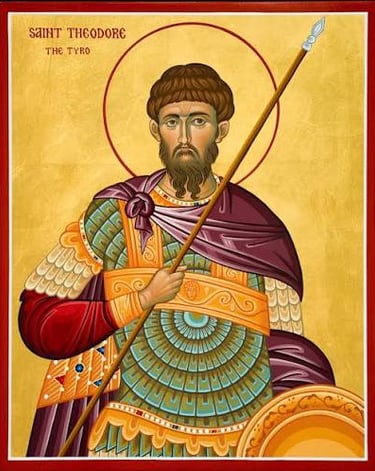
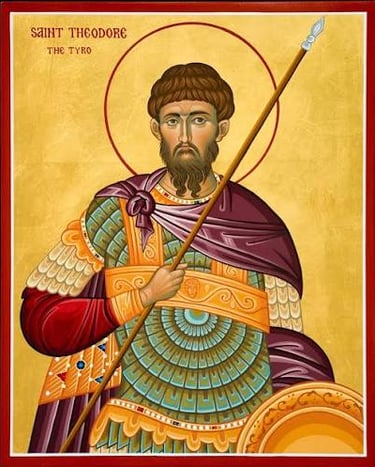
Saint Theodore the Recruit appeared to Archbishop Eudoxious of Constantinople in a dream 50 years after his martyrdom. [1, 2, 3]
Saint Theodore warned the Archbishop about the Emperor’s plot and instructed him to tell the faithful to stay away from the marketplaces. Saint Theodore instructed them to boil the wheat they already had in their homes and sweeten it with honey. [1]
By following Saint Theodore's instructions and eating only boiled wheat mixed with honey, the Christians avoided the unclean idolatrous meat, and prevailed over the emperor, this recipe became known as Koliva.
Neither approach changes the beautiful truth at the center of Koliva.
Every bowl still proclaims the Resurrection.
Every time I make Koliva, I think about how much better it is when everything comes together when you pray and go slowly.
The wheat is better when not rushed.
It has to be soaked.
Cooked.
Dried.
Waited on.
There is plenty of time to reflect on life and death in between, not enough but plenty.
There is something profoundly Orthodox about that.
We live in a world that wants everything instantly and where everything is rushed. Koliva reminds us that we are on earth and need to contemplate our death and pray for those who have died so that we may all join Christ one day.
Resurrection itself began with a seed hidden beneath the earth.
That’s why making Koliva never feels like just preparing a dessert for church, it feels like praying with your hands.
May our Holy Fathers and Saint Theodore pray for us!
Here are some examples of how Koliva is made around the world, there are plenty of different traditions but they are all well worth making and Christ honoring.
The first Saturday of Great Lent is dedicated to this miracle, and celebrated as Theodore Sunday, but Koliva is also prepared for funerals and memorial services like we do on Soul Saturdays.
The ancient people of Greece also prepared boiled wheat dishes during harvest festivals. Wheat was already understood as a symbol of life coming from death because every harvest began with a seed disappearing beneath the earth before returning many times over. Early Christians transformed this familiar symbol into something even more beautiful, centering it on Christ’s own words:
“Unless a grain of wheat falls into the earth and dies, it remains alone; but if it dies, it bears much fruit.” (John 12:24)
So the symbol of boiled wheat has always been a symbol of resurrection for Christian’s, Just as the grain is buried before bringing new life, so too are our loved ones laid to rest with the hope of rising again in Christ.
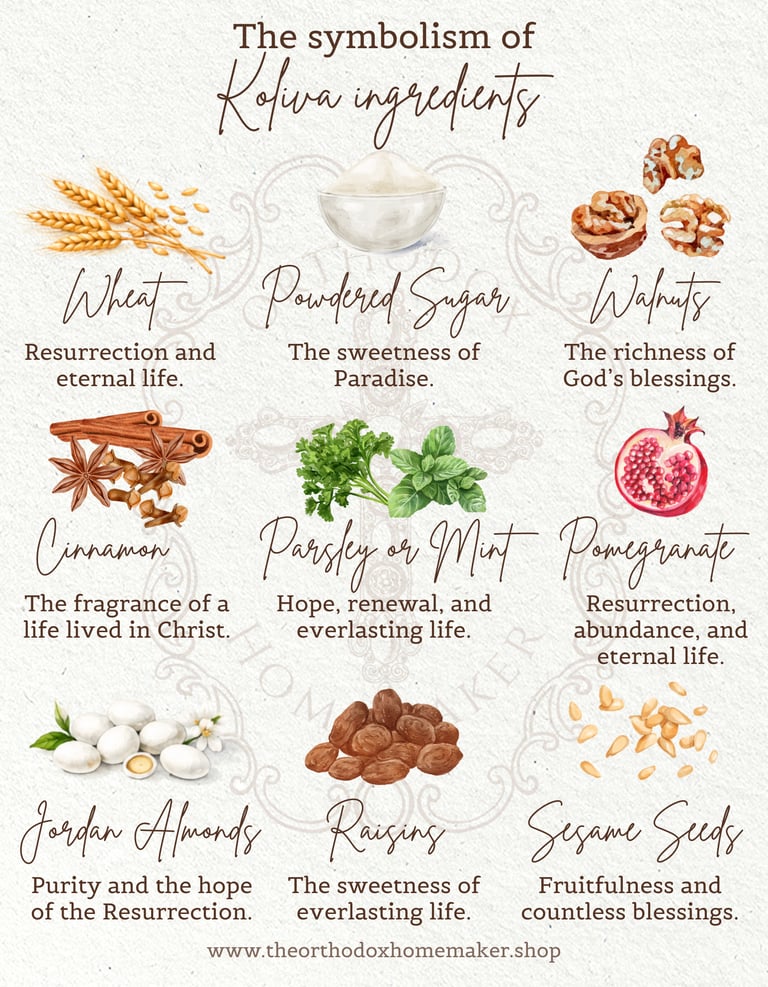
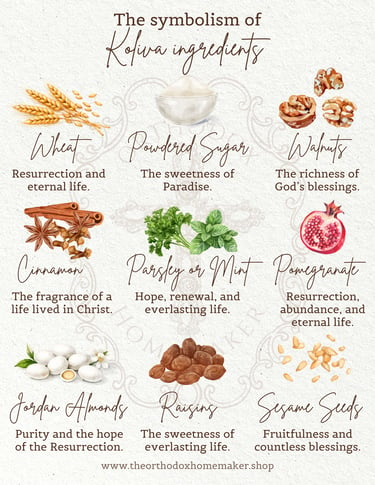
Every aspect of Koliva has a meaning...
Here's how to make Koliva:
To make Koliva, soak 1 lbs of wheat berries for 8-10 hours or overnight, The drain the wheat and boil for about an hour or until they become tender, sometimes you can skip the soaking step and boil for a longer period of time if you are short on time. after the wheat is ready, lay it out to dry on a kitchen towel overnight or in the oven at a low heat until it's only slightly moist. then in a large mixing bowl, mix all your preferred ingredients and top with powdered sugar then decorate to your liking. Before sprinkling the powdered sugar, add a layer of crushed up bread crumbs or gram crackers to create a barrier for the sugar or make sure the wheat berries are completely dry.
🇬🇷Greece
Greek Koliva is probably what most people picture.
It usually includes:
Wheat berries
Walnuts
Raisins
Sesame
Parsley
Cinnamon
Pomegranate
Powdered sugar
Jordan almonds
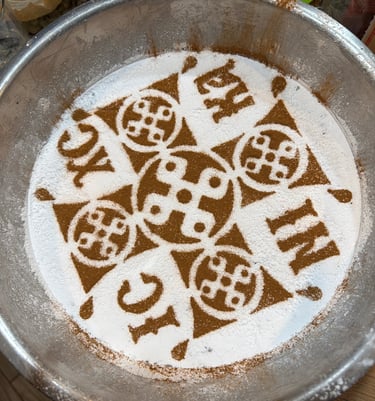
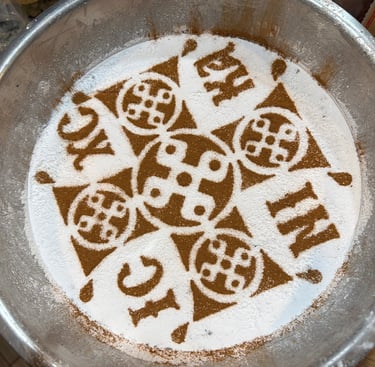
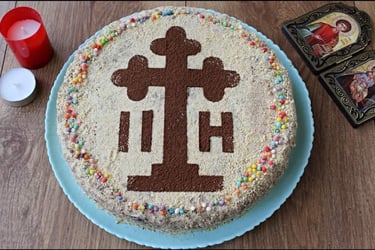
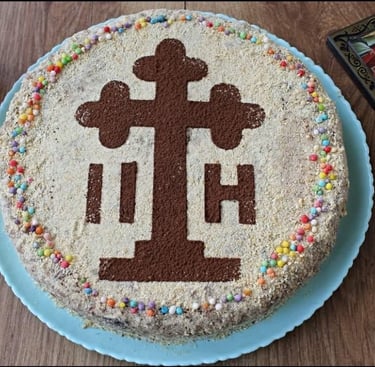
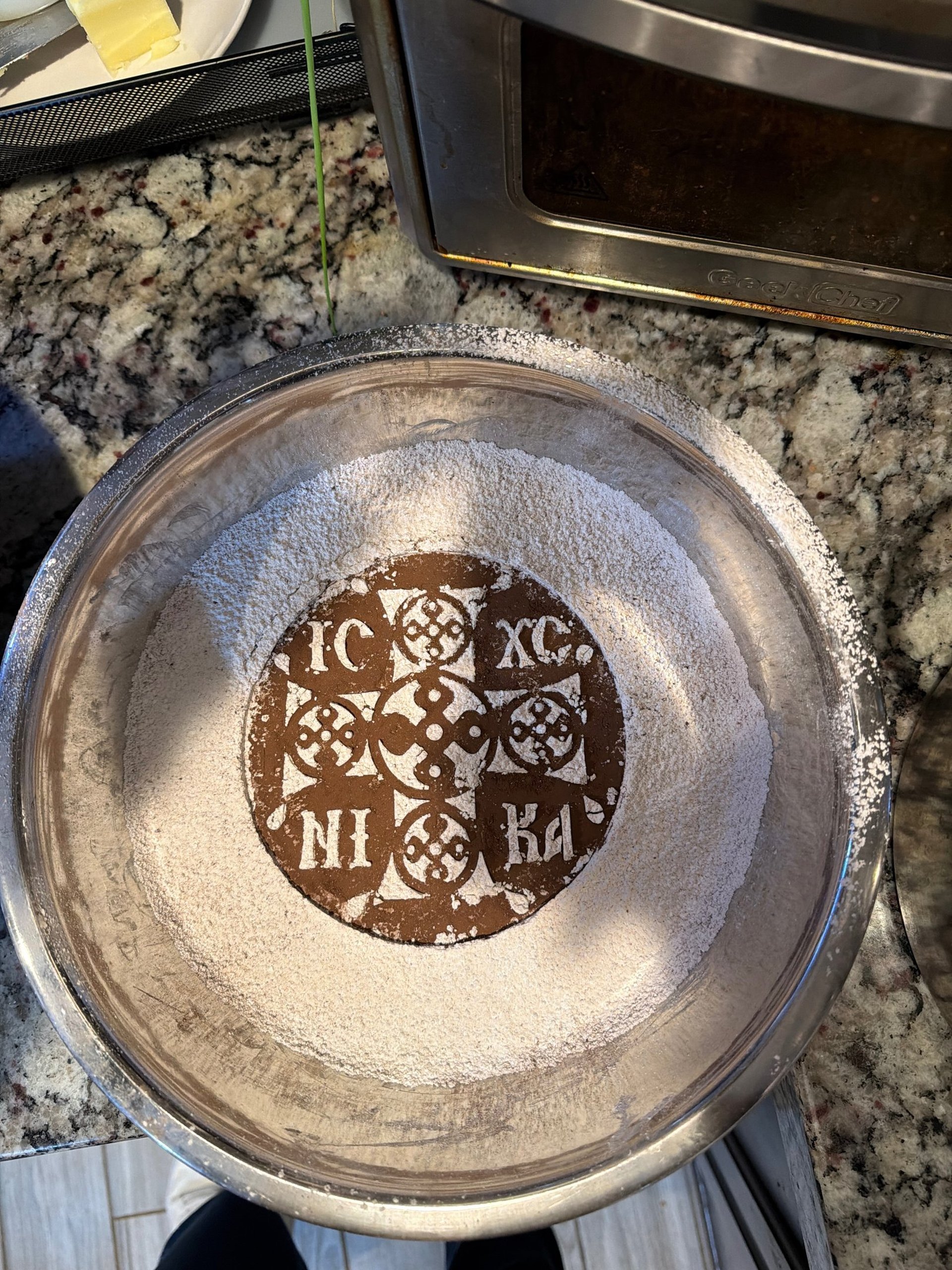
The top is traditionally decorated using crosses, flowers, vines, churches, or Christograms. The familiar IC XC NIKA design is especially beloved because it proclaims Christ’s victory over death—the very hope that every memorial service proclaims.
This is the tradition that inspired the stencils I design for The Orthodox Homemaker.
🇷🇴Romania
Romanian Colivă often has:
Vanilla
Cocoa powder
Lemon zest
Walnuts
Turkish delight
Cocoa crosses
Candies
Many Romanian families decorate the top with cocoa instead of relying only on powdered sugar.
Some even create beautiful lace-like designs.
🇷🇸Serbia
Serbian Koljivo (Žito) is often simpler.
Common ingredients include:
Wheat
Walnuts
Sugar
Vanilla
Nutmeg
Unlike Greece, Serbian families frequently prepare koljivo not only for memorials but also for a family’s patron saint celebration (Slava).
🇱🇧Lebanon & Antiochian
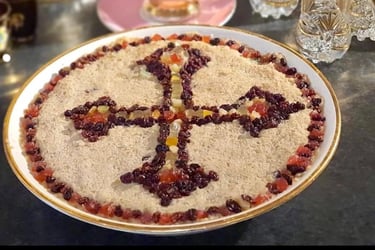
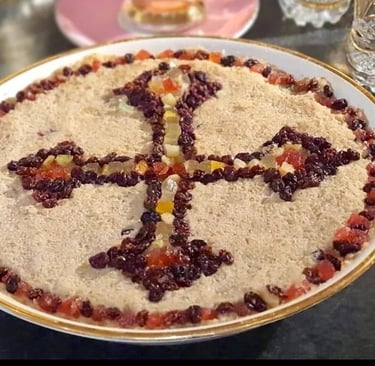
Among Antiochian Orthodox Christians, you’ll often find:
Wheat
Almonds
Pistachios
Raisins
Coconut
Anise
Cinnamon
The toppings are often more colorful, reflecting Middle Eastern flavors while keeping the same symbolism of resurrection. Similar wheat dishes are also known by names such as bleeleh, sleeqah, or rahmeh in different Arabic-speaking communities.
🇧🇬 Bulgaria
Bulgarian Kolivo often includes:
Walnuts
Cinnamon
Breadcrumbs
Sugar
The decorations tend to be beautifully simple, emphasizing the cross.
🇬🇪 Georgia
Georgian families sometimes prepare Korkoti or Tsandili, often using:
Wheat
Raisins
Honey
Honey is especially common, recalling both sweetness and God’s mercy.
One of my favorite things about Orthodoxy is that while the Church preserves the meaning, families lovingly preserve their own traditions.
Some parishes add:
Mini chocolate chips
Dried cranberries
Cherries
Apricots
Pecans
Pistachios
Coconut
Sunflower seeds
Others still make the exact recipe their great-grandmother brought from Greece, Romania, Serbia, or the Middle East.